

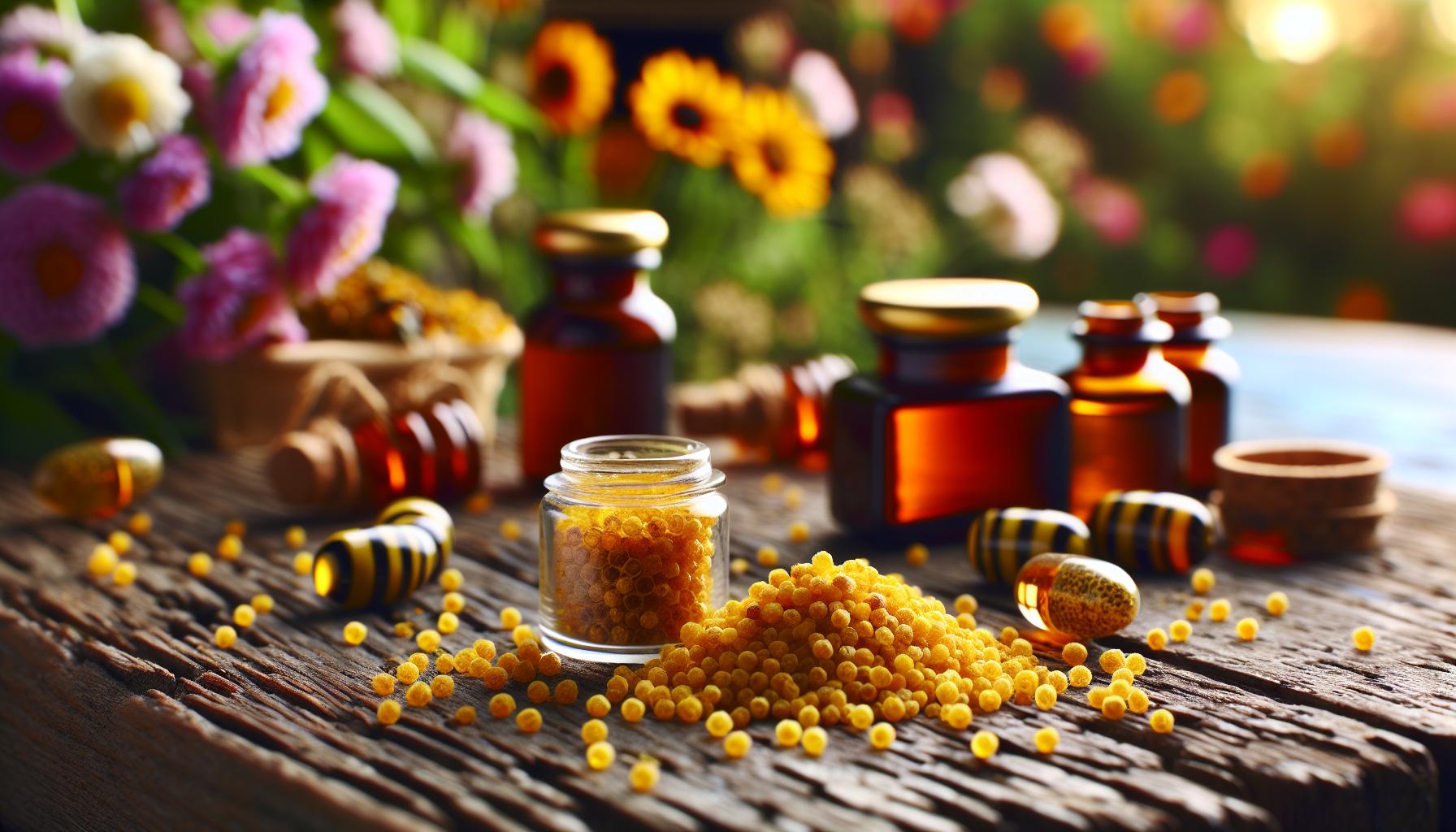
Bee Pollen vs Bee Propolis: What's the Difference for Your Health?
When people talk about products that come from the hive, bee pollen and bee propolis often come up together. Both are gathered by honeybees and both have long histories of use, but they are very different substances with different origins. Understanding these differences can help you tell them apart.
Bee pollen is made up of pollen that bees collect from flowering plants, mixed with nectar and bee secretions, and packed into small granules. Bee propolis is a resinous material bees make from plant resins and use to seal and reinforce their hive.
In this article, we'll look at the distinct characteristics of bee pollen and bee propolis, including what each one is, where it comes from, and how people typically use it.
Understanding Bee Pollen
Bee pollen is a hive product that many people are curious about. It consists of pollen collected by bees from flowering plants, mixed with nectar and bee secretions. This combination forms small granules.
What Is Bee Pollen?
Bee pollen is made by bees as they gather pollen grains from flowers and mix them with enzymes and nectar. This process turns the pollen into a food source for the colony. Bee pollen contains proteins, carbohydrates, lipids, vitamins, and minerals. Depending on the plants visited, its composition can vary. Our own wildflower bee pollen is collected at the hive with a pollen trap and then cleaned, so the granules reflect the range of wildflowers the bees visited.
Nutritional Composition of Bee Pollen
Bee pollen contains a mix of nutrients. One tablespoon (about 15 grams) typically holds approximately:
| Nutrient | Amount (per tablespoon) |
|---|---|
| Protein | 1-2 grams |
| Carbohydrates | 4-5 grams |
| Fat | 0.5-1 gram |
| Vitamin C | 1-3% of Daily Value |
| Vitamin A | 1-3% of Daily Value |
| Iron | 2% of Daily Value |
| Zinc | 1% of Daily Value |
Bee pollen contains plant compounds known as antioxidants. Its exact composition depends on the flowers the bees foraged.
How People Use Bee Pollen
Bee pollen comes in granules, capsules, and powders. Here are common ways people incorporate the granules into food:
- Smoothies: Add a spoonful of bee pollen to a smoothie.
- Yogurt: Stir bee pollen into yogurt.
- Salads: Sprinkle bee pollen over salads.
- Baked Goods: Add bee pollen to recipes such as energy bars or muffins.
Many people start with a small amount, such as a teaspoon, to see how they tolerate it before using more. If you have allergies to pollen or bee products, talk with a healthcare professional first.
Exploring Bee Propolis
Bee propolis is a substance bees make from tree resin mixed with their secretions and beeswax. Bees use this sticky material as a sealant in the hive, packing it into gaps and coating surfaces.
What Is Bee Propolis?
Bee propolis is a resinous material that bees collect from tree buds, sap flows, and other botanical sources. Bees use propolis to reinforce hive structure and seal openings. The color and composition of propolis depend on the plants available to the bees. Its makeup includes plant compounds such as flavonoids, phenolic acids, and essential oils, along with traces of wax and pollen.
How Propolis Is Collected
Beekeepers who want to gather propolis from their own hives typically use a propolis trap — a flexible screen that sits where the inner cover would go. Bees fill its narrow gaps with propolis, and the screen is then chilled so the brittle propolis can be popped free. Our 10-frame propolis trap is designed for exactly this kind of harvest. Outside the hive, propolis is most often sold as tinctures, capsules, and creams.
How People Use Bee Propolis
Bee propolis is available in various forms, including capsules, tinctures, and creams. People who use it generally follow the directions on the product label. Tinctures are sometimes added to water, and creams are applied to the skin. Because propolis is a bee product, anyone who is pregnant, nursing, or allergic to bee products should consult a healthcare professional before use.
Bee Pollen vs Bee Propolis
Understanding the differences between bee pollen and bee propolis makes it easier to tell the two hive products apart.
Key Differences
Bee pollen is primarily a nutrient-rich food source for bees, made of plant pollen, nectar, and bee enzymes. This blend forms small granules that contain proteins, vitamins, and minerals, with a composition that varies by floral source. Bee pollen is generally used as a food and is easy to mix into smoothies, yogurt, or salads.
Bee propolis, by contrast, functions as a natural hive sealant. It is made from tree resins, beeswax, and bee secretions, and contains plant compounds such as flavonoids and phenolic acids. In the hive, propolis is used to seal gaps and reinforce structure. Outside the hive, it is most often sold in tinctures, capsules, and creams. As with any supplement, it's best to follow product directions and consult a healthcare professional.
Similarities Between Bee Pollen and Bee Propolis
Both bee pollen and bee propolis originate from honeybees and the plants they visit. Each is gathered by the colony and each contains plant-derived compounds, including antioxidants. Both are also available in a range of consumer forms, from food-grade granules to tinctures, giving people flexibility in how they use them. While they serve different roles in the hive, the two products are often discussed side by side because they share this common origin.
Choosing Between the Two
Choosing between bee pollen and bee propolis depends on what you are looking for in a hive product. Consider what each one is and how it fits your preferences.
Considerations Before Choosing
- What You Want From It: Bee pollen is generally used as a food you can add to meals. Bee propolis is typically used as a supplement or topical product in tincture, capsule, or cream form.
- Form of Product: Bee pollen often comes in granules, powders, or capsules. Bee propolis is available as tinctures, capsules, or creams. Choose a form that fits your lifestyle and preferences.
- Allergies: Consider your allergy history. If you have pollen allergies, bee pollen may trigger reactions. Bee propolis may also cause allergic responses in people sensitive to bee products.
- Dietary Needs: Note any dietary restrictions. Some products may contain additives or allergens, so check that the product aligns with your needs.
- Consultation with Professionals: Talk with a healthcare professional before starting any new supplement, especially if you have a health condition or take medications.
Tips for Use
- Start Small: Begin with small amounts of bee pollen or bee propolis to see how you tolerate it.
- Mix and Match: Combine bee pollen with smoothies, yogurt, or salads for easy incorporation into meals. Use bee propolis tinctures or capsules according to the product directions.
- Avoid Heating Bee Pollen: Add bee pollen to cold or room-temperature foods rather than heating it, which can affect its delicate components.
- Follow Instructions: Stick to the amounts listed on product labels and follow the manufacturer's directions.
Common Questions
Allergies and Sensitivities
Bee pollen may trigger allergic reactions in some individuals, especially those allergic to pollen or related substances. Possible symptoms include itching, swelling, rashes, or difficulty breathing. Bee propolis may also cause allergic reactions, with similar symptoms. Before starting either product, consult with a healthcare professional, especially if you have pollen allergies or asthma. Begin with a small amount to see how your body reacts. In some cases, both bee products can cause digestive discomfort such as nausea or stomach cramps. Discontinue use if adverse reactions occur.
Typical Amounts on Product Labels
Suggested amounts for bee pollen and bee propolis vary by product. For bee pollen, labels commonly suggest starting with a small amount such as 1 to 2 teaspoons daily, often mixed into smoothies, yogurt, or other foods. For bee propolis, suggested amounts on labels generally range from 500 mg to 1500 mg per day, depending on the form (capsule, tincture, or cream). Always follow the product instructions for the specific form and concentration, and ask a healthcare professional for guidance, particularly if you have a health condition or are pregnant or nursing.
Conclusion
Bee pollen and bee propolis are both hive products with long histories of use, but they are distinct substances. Bee pollen is a nutrient-containing food made from plant pollen, while bee propolis is a resinous material bees use to seal and protect the hive. Which one interests you depends on whether you want a food to add to meals or a supplement in tincture, capsule, or cream form.
Consider your dietary needs and any potential allergies before adding either product to your routine. Starting with small amounts and consulting a healthcare professional will help you make an informed decision.
Frequently Asked Questions
What is bee pollen?
Bee pollen is a substance collected by bees from flowers. It consists of pollen, nectar, and bee secretions, formed into granules that contain proteins, vitamins, minerals, and plant antioxidants. It is generally used as a food that can be added to meals.
What is bee propolis?
Bee propolis is a resinous substance that bees create by mixing tree resin with their secretions and beeswax. It serves as a natural sealant for the hive. Outside the hive, it is commonly sold as a supplement in tincture, capsule, or cream form.
What is bee pollen made of?
Bee pollen is made of flower pollen mixed with nectar and bee secretions. It contains proteins, carbohydrates, fats, small amounts of vitamins and minerals, and plant antioxidants. Its exact composition depends on the flowers the bees visited. People often add it to smoothies, yogurt, salads, and baked goods.
What is bee propolis made of?
Bee propolis is made from plant resins combined with beeswax and bee secretions. It contains plant compounds such as flavonoids and phenolic acids. In the hive it is used to seal gaps and reinforce structure.
How do people use bee pollen?
People typically use bee pollen as a food, starting with a small amount such as 1 to 2 teaspoons daily and adding it to smoothies, yogurt, salads, or baked goods. It is best not to heat it. Always follow product instructions.
How do people use bee propolis?
Bee propolis is available as capsules, tinctures, and creams. Suggested amounts usually range from 500 mg to 1500 mg per day depending on the product. It's best to follow the label and consult a healthcare professional for personalized guidance.
Are there any allergy concerns with these products?
Bee pollen and bee propolis can trigger allergic reactions, especially in individuals with pollen allergies. Possible effects include itching, swelling, or digestive discomfort. Consult a healthcare professional before starting either product and begin with a small amount to monitor for reactions.
How do bee pollen and bee propolis compare?
Both bee pollen and bee propolis originate from bees and contain plant-derived compounds. However, they serve different purposes: bee pollen is a nutrient-containing food, while bee propolis is a protective resin for the hive. Understanding their differences can help you choose the one that fits your interests.
Beekeeping supplies from Blythewood Bee Company
If you'd like to try bee pollen or harvest propolis from your own hives, here is what we carry. We stock raw wildflower bee pollen; propolis is harvested at the hive using a propolis trap rather than sold as a consumable in our store.

Leave a comment